Showing posts with label North Carolina. Show all posts

Tuesday, February 17, 2015

Losing health benefits? Study blames recession

If your employer provides health insurance,  you're probably paying more for less  --  and wondering who's to blame.  The Affordable Care Act has contributed to rising costs by mandating certain types of coverage,  allowing many adult children to stay on parents'  policies and levying a 2018 tax on high-cost  "Cadillac plans."

But the trend toward reducing benefits and dropping health insurance altogether was in full swing before the act kicked in this year, according to a recent analysis by the University of Minnesota’s State Health Access Data Assistance Center and the Robert Wood Johnson Foundation.

Before to the recession, the research shows that employer coverage was fairly stable.  Between 2004-05 and 2008-09,  for instance,  North and South Carolina,  like most of the country,  saw no significant change in the percent of employers offering health insurance.  But the rates dropped from 2008-09,  the start of the recession,  to 2012-13.  In North Carolina it went from 53 percent to 47 percent,  and in South Carolina from 54 percent to 47 percent.  Most of that decline has come from companies with fewer than 50 employees.


That's consistent with what I've heard.  For instance,  I wrote last fall about Charlotte's Blue Max Materials,  a small employer,  dropping health insurance in the face of rising costs.  Meanwhile,  the owner of Stafford Cutting Dies bumped up deductibles dramatically to cope with skyrocketing costs for a small-business policy.


“Most Americans still get health insurance through their jobs, but this has been declining for more than a decade,” said Katherine Hempstead, who directs coverage issues at the foundation. “It will be interesting to see how that trend evolves now that there are more opportunities for coverage through the individual market and Medicaid.”

The report includes detailed breakdowns for each state.


Tuesday, February 10, 2015

Health activist moves from Obama's home to Tar Heel state

One of the best-known health care activists from President Obama's home state has recently moved to North Carolina.

Jim Duffett,  longtime director of the Illinois Campaign for Better Health Care,  relocated to Chapel Hill in August,  drawn by milder winters and job opportunities for his wife,  an oncology nurse.  In Illinois he spent 30 years working for affordable care and patient rights,  eventually building a coalition of 300 groups representing health care,  faith,  labor and various communities.

Duffett

"One fond memory is having had the honor of working with Obama on health care reform in Illinois during Obama's years as a (state) senator,  and now,  'knowing he is the president and still knows you,'  "  Duffett said in an interview with The  (Champaign)  News-Gazette.

Duffett,  a proponent of a single-payer insurance system,  has connected with the NAACP-led Forward Together Moral Movement and is looking for work in advocacy here.  He says he's still getting up to speed on North Carolina's health care scene,  but sees some similarities with his old turf.  Both states have powerful political opposition to Medicaid expansion,  he said,  and Illinois'  2013 approval was hard-fought and narrowly won.  In North Carolina,  he says,  he hopes to build alliances with some of the hospital,  medical and business interests that united with more traditional anti-poverty groups in Illinois.  "There's definitely going to have to be a bit more base-building,"  he said,  though the Moral Monday protests  "are definitely galvanizing folks."


Sunday, February 8, 2015

Single white Southerners: ACA benefits may await

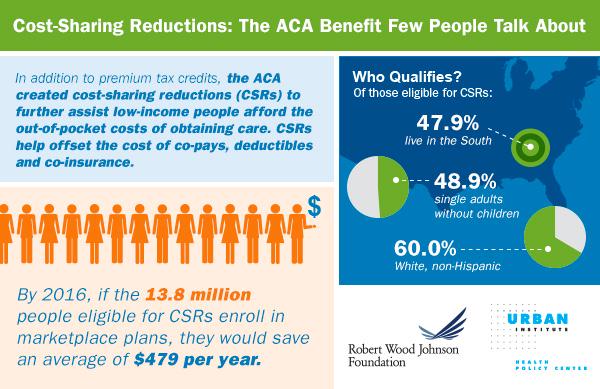
People who are eligible for aid paying out-of-pocket medical costs are most likely to be white, single and living in the South,  according to a new report from the Robert Wood Johnson Foundation and the Urban Institute.

Most people know that the Affordable Care Act provides tax credits  (aka subsidies)  to help low- and moderate-income people buy health insurance.  Less known,  the authors say,  is that people earning up to 200 percent of the federal poverty level  ($29,175 for a single person)  can also get help paying out-of-pocket expenses,  a major concern in an era of high-deductible policies.


"This benefit seems to fall off the radar sometimes,"  said Katherine Hempstead,  director of coverage for the Johnson foundation.  People need to choose a silver plan to qualify for that help, she added.  Those who choose a bronze plan for the lower premiums may end up worse off when they're hit with higher out-of-pocket bills.

The study looks at who is expected to fall into those income ranges in 2016,  though it's obviously timed to remind people about enrollment before the Feb. 15 deadline for 2015 sign-ups.  The authors broke the country into four regions and found that almost half of the eligible people live in the South  (a zone that includes such states as Texas,  Louisiana and Oklahoma,  as well the Southeast).

That's probably because many of those states,  including North and South Carolina,  haven't accepted federal money to expanded Medicaid.  In states that did,  people who fall below 138 percent of poverty qualify for Medicaid.  In non-expansion states,  those between 100 and 138 percent qualify for aid on the exchange.  Many who make less than the poverty level fall into the Medicaid gap and can't afford insurance.

Single people without children accounted for the biggest block by family status  (48.9 percent),  and non-Hispanic white people made up 60 percent of the eligible people.

The study doesn't account for how many people within the income brackets may have other types of  insurance and how many are already be getting the subsidies.

Friday, February 6, 2015

NC Medicaid battle: Hard numbers and human stories

The groups fighting for North Carolina to expand Medicaid this year are taking a two-pronged approach.

In news conferences in Charlotte and Raleigh this week,  the N.C. Medicaid Expansion Coalition urged people to share their stories at NCLeftMeOut.org.  They're looking for personal tales from people like Charlotte's Dana Wilson,  whose multiple sclerosis limits her to working a few hours a week at an antique shop.  Wilson doesn't earn enough to qualify for subsidized health insurance and isn't eligible for Medicaid.

Charlotte news conference

But the coalition,  led by Action NC and Progress NC,  is also taking a more hard-nosed approach, focusing on jobs and tax revenue that would be generated by accepting the federal money to expand Medicaid coverage.

A recent report by George Washington University's Milken Institute School of Public Health,  commissioned by the Cone Health Foundation and the Kate B. Reynolds Charitable Trust,  projects that if state lawmakers were to approve expansion this year,  the decision would generate about 43,000 jobs by 2020.  About half would be in health care,  the report says,  with the rest spread among sectors ranging from construction to retail "as health care workers use new income to pay their mortgages, buy groceries, pay taxes and so on."

"At county levels, if Medicaid is not expanded by 2016, Mecklenburg and Wake Counties would create about 4,500 fewer jobs each by 2020,"  the report says.  "Mecklenburg County’s total economy (gross county product) from 2016 to 2020 would be almost $1 billion lower."


"Lawmakers like to talk about fiscal responsibility,"  Wilson said in Charlotte Thursday.  "It's just common sense."


The Affordable Care Act includes money to expand Medicaid in all states  --  and levies taxes that everyone is paying,  regardless of whether the state accepts the money or not.  A handful of Republican-led states that initially said no have gotten permission to craft their own version of coverage.  Indiana was the most recent in late January,   and N.C. Gov. Pat McCrory has signaled some interest in crafting a North Carolina plan.

"As we review continue to review health care options for the uninsured,  we are exploring North Carolina-based options that will help those who can't help themselves, and encourage those who can,"  McCrory said in Wednesday's State of the State address.  "If we bring a proposal to cover the uninsured, it will protect North Carolina taxpayers. And any plan will require personal and financial responsibility from those who would be covered."


Read more here: http://www.charlotteobserver.com/2015/02/04/5494786/text-of-nc-gov-mccrorys-state.html#storylink=cpy
As the pro-expansion advocates noted,  that's still far from a specific plan.  And there's still little sign that Senate President Pro Tem Phil Berger or newly elected House Speaker Tim Moore are on board for any kind of expanded coverage.

Friday, January 16, 2015

Coverage push tailored to LGBT community

A national coalition working to get lesbian,  gay,  bisexual and transgendered people health coverage under the Affordable Care Act has been working with North Carolina advocates to spread the word.

Out2Enroll,  a national initiative pushing enrollment in the LGBT community,  spent last week working with North Carolinians who are doing ACA sign-ups to make sure the message is spread in ways that include people who have often been shut out,  said Katie Keith, an Out2Enroll leader who did training in Charlotte,  Raleigh,  Greensboro and Asheville.


Many may be wary because they've faced insurance discrimination in the past,  said Keith,  whose Trimpa Group progressive consulting firm has long been active in sexual orientation issues.  The ACA,  often dubbed Obamacare,  explicitly bans discrimination based on sexual orientation or gender identity.  It also specifies that people changing gender can't be denied coverage by defining it as a pre-existing condition,  she said, though people still need to carefully check individual policies to see how such transgender issues as hormone therapy and counseling are covered.

"Folks don't think of health care as an equality issue,  but in many ways it is,"  Keith said.

Out2Enroll was created by Trimpa,  the Center for American Progress and the Sellers Dorsey Foundation.  Its web site offers consumer guidance on such issues as whether same-sex couples can apply for family coverage on the ACA exchange  (yes if they're legally married,  no if they're in a different type of partnership).  There's also a look-up to help LGBT people find enrollment help from groups that have gone through cultural competency training.  So far none of the Charlotte groups has the rainbow logo that indicates that endorsement,  but Keith says that's changing.  She met with local enrollment workers and spoke to some LGBT-welcoming churches during the North Carolina tour.

Research by the Center for American Progress,  a Washington-based progressive advocacy group,  shows the first year of the ACA has reduced the percentage of low- and moderate-income LGBT people who are uninsured.  In 2013 the group found that just over one-third of people with incomes at or below 400 percent of the federal poverty level  (the cutoff for getting federal subsidies)  were uninsured.  In 2014 that had dropped to 26 percent.

Monday, January 12, 2015

Blue Cross clarifies NC cost tool

When Blue Cross and Blue Shield of North Carolina unveiled a new online cost tool last week, the immediate concern raised by national experts and Charlotte health executives was that it wasn't clear what the numbers mean.

Blue Cross spokeswoman Michelle Douglas said Monday the company has added an explanation:  Cost estimates are averages based on historical BCBSNC claims data. Amounts listed typically include physician fees, facility fees and costs for things like anesthesia, drugs, medical supplies – as well as customer responsibility (deductible, co-pay and co-insurance). Your actual costs may be different based on variations in these factors as well as your health plan design, deductibles/co-insurance and out-of-pocket limits.

"The fact that hospitals say the numbers are Greek to them is indicative of why the tool was necessary,"  Douglas said in an email.  "Before, customers had no place to go and ask how much the total cost (physician fee, hospital fee, labs, anesthesia, etc.) of a health care procedure might be."

Meanwhile,  John Murawski with the News & Observer forwarded a message noting that UnitedHealthcare offers cost estimates to the public on its Health4Me mobile app  (it's free on for Apple or Android devices,  or see an online demonstration).


The UnitedHealthcare guest function lists estimates  "based on local market average costs,"  rather than breakdowns by provider,  as the Blue Cross tool does.  (UnitedHealthcare, Blue Cross and many other insurance companies offer more detailed members-only data,  including what patients can expect to payout of pocket based on their plan.)   I looked up knee replacement,  which the Blue Cross tool listed as ranging from $20,154 to $40,148 in the Charlotte area.  On Health4Me I got a Charlotte average of $60,185  ($59,125 for the procedure itself,  with the rest for pre- and post-surgical office visits and physical therapy).

So we're all starting to get a peek behind the curtain of health care costs.  But making sense of it is going to take a lot more work.

Friday, January 9, 2015

Moral Movement targets Medicaid expansion

The Rev. William Barber,  president of North Carolina's NAACP branch, is turning to the Bible in his call for state lawmakers to expand Medicaid coverage to impoverished adults.

"Gov. Pat McCrory and his allies in the North Carolina Senate and House are returning to Raleigh to continue their unrelenting War on the Poor,"  Barber says in a statement released Friday.  "The Governor and legislators of North Carolina need to be reminded of the requirements of the Constitutions they swore to uphold, drawn from Judeo-Christian values expressed in the Bible they hold when they are sworn into office. One particular scripture makes it clear that although they profess to believe in God and His sacred scriptures, their hearts and actions are far from Him: 'Doom to you who legislate evil, Who make laws that make victims; Laws that make misery for the poor, That rob my destitute people of dignity'  (Isaiah 10, 1-4)."

Barber (center)
Barber sent the statement in response to news of this week's meeting between McCrory and President Obama to discuss options that would let the state craft its own version of coverage for thousands of low-income people who fall into the Medicaid gap.  McCrory,  unlike some legislative leaders,  wants to find a way to take the money and expand Medicaid,  but with conditions,  such as tying eligibility to having a job or being in job training.  It's unclear whether the federal government would accept such a plan,  even if he could get the General Assembly to sign on.

Barber says McCrory's plan  "deviates in substantial ways"  from the intent of the program.  He also cited a recent Families USA study showing that many of the people who are now shut out of affordable coverage are working people in jobs such as construction,  food service and transportation, working for low wages without workplace insurance.  If their income falls below the federal poverty level  ($23,850 for a family of four),  they can't get subsidies to buy insurance on the Affordable Care Act marketplace,  either.

The statement was issued on behalf of the NAACP and the Forward Together Moral Movement,  which grew out of Moral Monday protests when the state legislature was in session in 2013 and 2014.  They'll convene for 2015 on Wednesday,  and it's a safe bet that protesters won't be far behind.

Wednesday, December 31, 2014

Resolution: Double-check health coverage

If you're starting 2015 with new health insurance,  congratulations.  We just learned that about 110,000 North Carolinians used the federal marketplace to buy new policies that take effect Jan. 1.  Almost 140,000 others who already had coverage through the Affordable Care Act went to HealthCare.gov by Dec. 15 to either renew that plan or select a new one for 2015.

For those who procrastinated,  there are six more weeks to sign up and/or compare options.  The numbers suggest that tens of thousands in this state simply let their 2014 policies renew.  That may bring a bigger bill in January,  but it's not too late to switch.  You can still shop around and make a new choice that will be effective in February or March.

Linker
"We know from past experience that people don't like shopping for insurance and inertia takes over,"  said Adam Linker,  health policy analyst for the N.C. Justice Center.

Linker notes that unlike last year,  when choices were final,  this year's rules allow changes up to Feb. 15 even if you already made a 2015 selection.  He suggests using the next six weeks to call your doctors and check with your preferred hospitals to make sure they're in the network for your plan.  Even if you checked when you were buying,  there can be hiccups and last-minute changes.  It's better to discover them while you still have options than when you're sick and stuck.

Tuesday, August 19, 2014

98,000 uninsured in NC could qualify for help

Almost 98,000 uninsured North Carolinians may qualify for special enrollment that could get them subsidized health insurance, according to estimates released today by the nonprofit Enroll America.

The 2015 open enrollment period for Affordable Care Act insurance exchanges doesn't start until Nov. 15,  but life changes such as marriage, moving or losing a job spark 60-day special enrollment periods.

The federal government hasn't released any numbers on how many have actually taken advantage of that option,  but Enroll America used Census data to estimate the percent of each state's uninsured population likely to experience a move,  marriage,  birth or new citizenship in the seven months between 2014 and 2015 open enrollment.

In North Carolina that would come to 6.9 percent of more than 1.4 million uninsured,  or 97,905 people.  In South Carolina the group estimates that 47,850 people,  or 6.8 percent of the uninsured population,  experienced one of those changes.

The report also says almost 52,500 people in North Carolina and 29,650 in South Carolina are likely to be released from incarceration or earn permanent resident status during that seven-month stretch.  Those events also trigger special eligibility.
